The Sun

The Sun: The Fading Foe
The South African sun as a “fading foe,” a fitting metaphor for an environmental force that is both life-giving and relentlessly destructive to interior furnishings. To understand the full scope of this challenge, we must delve into the specific characteristics of sunlight in this region, the chemical and physical processes it triggers, and the often-hidden costs for homeowners.
1. The Unique Aggressor: Why the South African Coast is a Hotspot for Damage
The summary correctly points to the intensity of UV radiation in South Africa’s coastal suburbs. Several factors converge to create this uniquely harsh environment:
- Latitude and Ozone: South Africa sits at a relatively low latitude (around 22°S to 35°S), meaning the sun is more directly overhead for much of the year than in Europe or North America. This naturally increases UV irradiance. Furthermore, the Southern Hemisphere experiences a well-documented “ozone hole” effect (though less severe than over Antarctica), leading to periods of higher UV-B radiation—the most damaging wavelength for organic materials.
- Reflective Surfaces: Coastal suburbs introduce a powerful amplifying factor: albedo, or surface reflectivity. White sand, sea foam, and the vast expanse of the ocean itself reflect a significant portion of UV rays. Unlike inland environments where the ground (soil, grass) absorbs most UV, a coastal home receives both direct sunlight and reflected UV from below and the sides, effectively baking fabrics and frames from multiple angles.
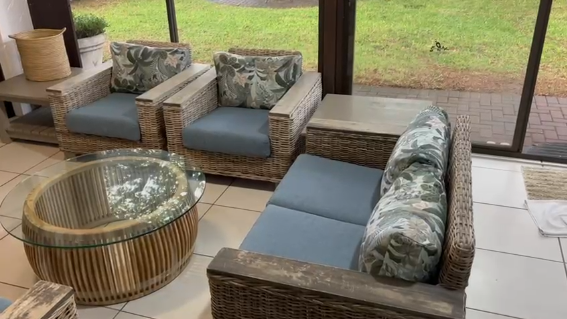
- Architectural Design: As noted, homes are often designed with expansive glass facades, floor-to-ceiling windows, and sliding doors to maximize light and ocean views. While beautiful, these architectural choices act as a greenhouse trap and a UV highway. Standard window glass blocks UV-B but allows a significant portion of UV-A (which also causes fading and degradation) and virtually all infrared heat to pass through. So-called “energy-efficient” low-E glass still transmits enough UV-A to cause long-term damage.
2. Fabrics: A Molecular Assault on Color and Integrity
The summary states that UV radiation breaks chemical bonds in dyes. Let’s unpack that process:
- Chromophores and Photodegradation: Fabric dyes contain chromophores—molecular structures that absorb specific wavelengths of visible light and reflect others (e.g., reflecting blue light to appear cerulean). UV photons carry more energy than visible light photons. When a high-energy UV photon strikes a chromophore, it can shatter the delicate double bonds or aromatic rings that create that color. The result is a shorter, non-light-absorbing molecule—or one that now absorbs a different part of the spectrum, appearing grey, yellow, or white.
- Why Blue Fades Fastest: The summary’s example of cerulean blue turning to grey is scientifically astute. Blue and violet dyes have chromophores that absorb high-energy light (red and yellow wavelengths). Ironically, this makes them particularly vulnerable to UV attack because the energy required to break them is closer to the energy UV photons carry. Red dyes, by contrast, absorb lower-energy green and blue light and often (though not always) have more stable molecular structures. This is why a multi-colored rug will often show its blue and purple threads bleached first, leaving a strange, reddish remnant.
- Yellowing of Whites: White fabrics rely on optical brighteners (fluorescent whitening agents) that absorb invisible UV light and re-emit it as visible blue light, making the fabric appear brilliantly white. UV exposure destroys these brighteners over time. Without them, the fabric’s natural, yellowish base color (from lignin in cotton or polymer degradation in synthetics) emerges, resulting in a dingy, yellowed appearance that laundering cannot fix.
3. Foam and Structure: The Hidden Decay Beneath the Surface
The sun’s infrared (heat) radiation is as destructive as its UV, particularly for cushioning and frames.
- Polyurethane Foam Dry Rot: Most furniture cushions use polyurethane foam. Heat accelerates oxidation—a reaction with ambient oxygen that slowly turns the flexible polymer matrix into a brittle, crumbly solid. The summary’s term “dry rot” is apt. Initially, the foam loses its resilience (ability to spring back). Then, it begins to hydrolyze (react with moisture in the air), forming acidic byproducts that further catalyze breakdown. After a few years in a sun-drenched bay window, the foam can be reduced to a fine, sticky, yellow dust that leaks through fabric covers.
- Wooden Frames and Warping: Wood is hygroscopic—it naturally contains moisture and oils that maintain its dimensional stability. Prolonged infrared heat exposure does two things:
- Dries out lignins and natural oils: Lignin, the “glue” that holds wood fibers together, becomes brittle. The wood loses its flexibility and develops surface checking (tiny cracks along the grain). Eventually, these deepen into structural cracks.
- Uneven expansion/contraction: The side of a wooden frame facing the window heats up and dries out faster than the shaded side. This creates a moisture gradient, causing the wood to warp—cupping, bowing, or twisting. A once-straight sofa arm can become visibly curved.
- Leather and Synthetics: While not mentioned in the summary, it’s worth noting that sun also destroys leather (leather is tanned skin; UV breaks down the collagen fibers, causing cracking and powdering) and weakens synthetic webbing straps used in many modern furniture frames, leading to sudden sagging or failure.
4. Beyond Aesthetics: Practical and Financial Consequences
The summary implies fading and crumbling are cosmetic issues, but the real-world impact is deeper:
- Reduced Lifespan: A sofa that could last 10-15 years indoors may last only 3-5 years in a harsh, sun-exposed coastal room.
- Health Hazards: Crumbling foam dust is an irritant and can exacerbate asthma or allergies. Dry-rotted wood can harbor mold or simply collapse under weight, causing injury.
- Resale Value: Faded, warped furniture has near-zero resale value. For homeowners renting out furnished properties, sun damage is a recurring, non-recoverable expense.
- Emotional Cost: The frustration of watching a carefully chosen, expensive piece of furniture visibly deteriorate within months is significant.
5. Mitigation Strategies (Implicit in the “Foe” Metaphor)
Understanding the enemy allows for defense. The summary’s tone suggests action is needed. Comprehensive solutions include:
- Physical Barriers: Use UV-blocking window films (which can block >99% of UV-A and UV-B) or exterior shutters, awnings, or solar screens. Interior curtains or blinds help, but only if they are closed during peak sun hours.
- Smart Fabric Choice: When reupholstering or buying new, look for:
- Solution-dyed acrylic (e.g., Sunbrella): The color pigment is added to the liquid polymer before the fiber is extruded, so the color runs through the entire fiber. These are exceptionally UV-resistant.
- High UV-resistance ratings (look for AATCC 16.3 test results; a rating of 500+ hours is good, 1000+ excellent).
- Foam Protection: Use furniture with high-resiliency (HR) foam or foam wrapped in polyester batting (which acts as a thermal insulator). Some foams now include UV stabilizers and antioxidants.
- Rotate and Rearrange: Rotate cushions weekly so all sides get equal exposure. Move furniture away from direct window light every few months.
- Seasonal Strategy: In summer, when the sun is highest and harshest, rearrange rooms entirely, moving vulnerable pieces to interior walls.
Conclusion
The “fading foe” is not an exaggeration. The South African coastal sun—amplified by latitude, reflectivity, and architectural trends—subjects home furnishings to a triple assault: UV photons break chemical bonds (fading), infrared heat accelerates oxidation (foam dry rot), and thermal gradients cause physical distortion (wood warping). This is not a minor maintenance issue but a fundamental material-science challenge. To live beautifully by the sea, one must either surrender to rapid degradation or wage an informed, proactive defense—using barriers, intelligent material selection, and disciplined maintenance. The sun may be eternal, but with the right strategy, your furniture doesn’t have to be ephemeral.